
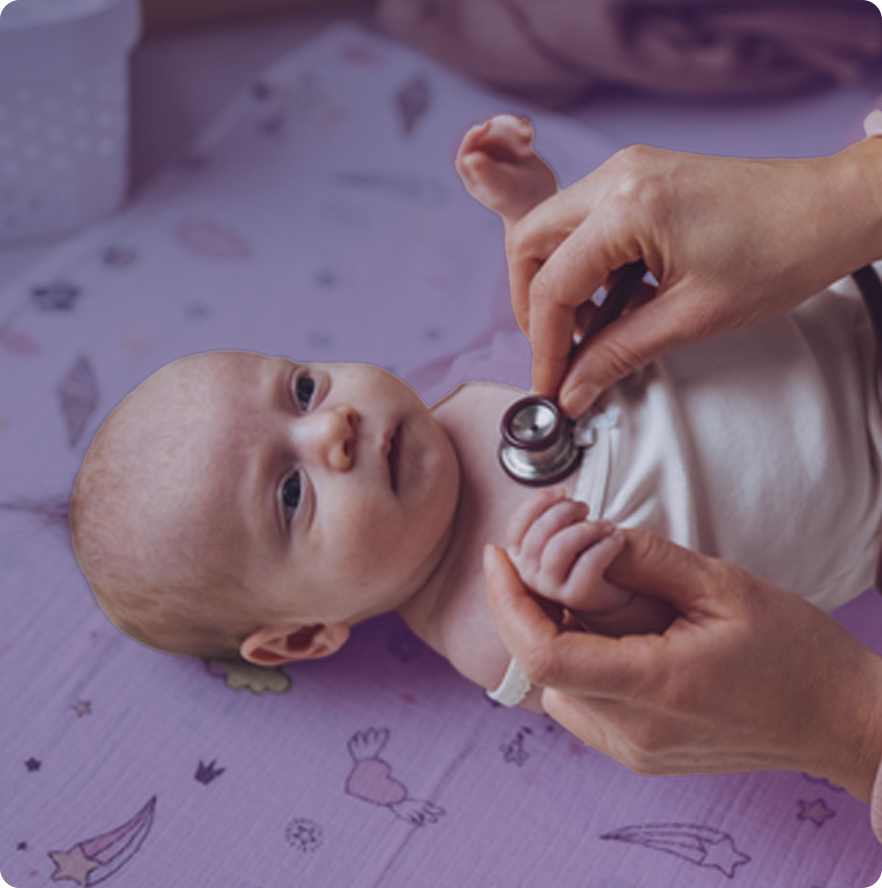


Read the 2020 PTN Annual Review.
This Annual Review summarizes the Network’s activities in 2020.
Read the 2020 PTN Annual Review.
This Annual Review summarizes the Network’s activities in 2020.
Watch the ampicillin Results-at-a-Glance video summary.
This video version of the ampicillin Results-at-a-Glance summary features iCAN member Kenneth.
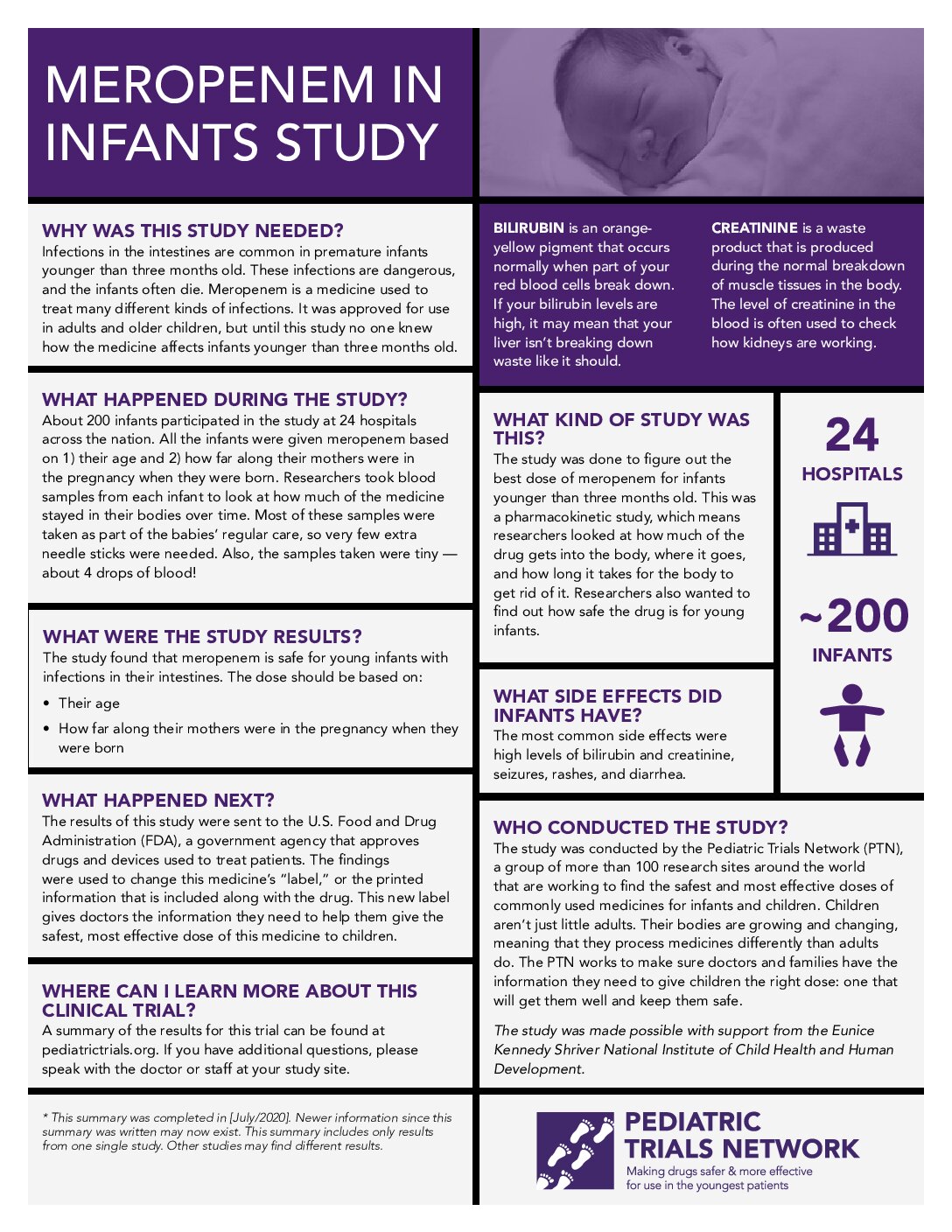
Read the meropenem Results-at-a-Glance summary.
Infections in the intestines are common in premature infants younger than three months old. These infections are dangerous, and the infants often die. Meropenem is a medicine used to treat many different kinds of infections. It was approved for use in adults and older children, but until this study no one knew how the medicine affects infants younger than three months old.
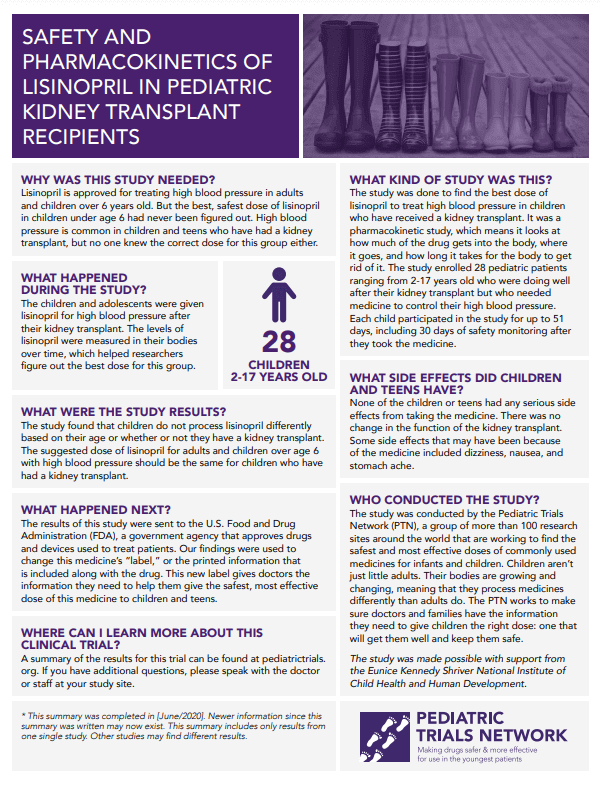
Read the lisinopril Results-at-a-Glance summary.
Lisinopril is approved for treating high blood pressure in adults and children over 6 years old. But the best, safest dose of lisinopril in children under age 6 had never been figured out. High blood pressure is common in children and teens who have had a kidney transplant, but no one knew the correct dose for this group either.

Read the acyclovir Results-at-a-Glance summary.
Herpes simplex virus (HSV) is a dangerous infection that can often cause death or mental disability in infants. Acyclovir is a medicine approved by the U.S. Food and Drug Administration (FDA) for HSV but the best and safest dose of acyclovir for infants, particularly premature infants, was not previously known. The “Open-Label Study to Describe the Pharmacokinetics of Acyclovir in Premature Infants” study was conducted in order to learn more about the appropriate level of acyclovir dosing for infants.
Read the 2019 PTN Annual Review.
This PTN Annual Review Summarizes the Network’s activities in 2019.
Read the 2016 PTN Annual Review.
This PTN Annual Review summarizes the Network’s activities in 2016.

How to perform dried blood spot sample collection
Reflections on Errors in Neonatology I (PDF)
Reflections on Errors in Neonatology II (PDF)
Reflections on Errors in Neonatology III (PDF)
Considerations in the rational design and conduct of phase I/II pediatric clinical trials: avoiding the problems and pitfalls.
Abdel-Rahman SM, Reed MD, Wells TG, Kearns, GL
Clinical Pharmacology & Therapeutics, Volume 81, Number 4, 28 February 2007, Pages 483-494.
Understanding the relative roles of pharmacogenetics and ontogeny in pediatric drug development and regulatory science.
Leeder, JS, Kearns, GL, Spielberg, SP, van den Anker, J
The Journal of Clinical Pharmacology, Volume 50, Number 12, 11 February 2010, Pages 1377-1387.
Developmental pharmacogenomics.
Neville, KA, Becker, ML, Goldman, JL, Kearns, GL
Pediatric Anesthesia, Volume 21, Issue 3, March 2011, Pages 255-265.
Developmental pharmacology–drug disposition, action, and therapy in infants and children.
Kearns, GL, Abdel-Rahman, SM, Alander, SW, Blowey, DL, Leeder, JS, Kauffman, RE
New England Journal of Medicine Volume 349, September 2003, Pages 1157-1167.
The National Institutes of Health and the Best Pharmaceuticals for Children Act.
Zajicek, A
Pediatric Drugs, Volume 11, Issue 1, January 2009, Pages 45-47.
Best Pharmaceuticals for Children Act (BPCA)
Food and Drug Administration (FDA)
Health Insurance Portability and Accountability Act (HIPAA)
American Academy of Pediatrics (AAP)
American Pediatric Society (APS)
American Society for Clinical Pharmacology and Therapeutics (ASCPT)
Clinical Trials Transformative Initiative (CTTI)
CTTI: Antibacterial Drug Development (ABDD) Program
The International Children's Advisory Network (iCAN)
Maternal and Pediatric Precision in Therapeutics (MPRINT) Hub
National Association of Pediatric Nurse Practitioners
National Institute of Diabetes and Digestive and Kidney Diseases (NIDDK), NIH

Kelly Wade, MD, PhD, Children’s Hospital of Philadelphia, Co-Chair of the PTN Safety and Ethics Core

The only way to safely dose medicine for children is to study the medicine in children. When it comes to how the body handles a medication, we have to remember that children are not small adults and infants are not even small children. Fortunately, we now have the technology to measure medication concentrations in just a few drops of blood and can coordinate the timing of a blood draw with one already being done for clinical care. By doing so, we can determine how to dose these medications in infants and children while minimizing any risks posed to study participants.
Many safeguards are in place to protect the safety of patients enrolled in all research studies. All research studies are voluntary, all procedures involved in research are fully disclosed during the informed consent process (see below), and all studies adhere to a strict confidentiality policy. Children will receive the same care whether or not they are participating in research. All children are monitored for any safety and adverse events, and these events are reviewed by a monitoring committee that will stop a study if harm is detected.
In fact, clinical trial programs have been shown to have public health benefits not only for trial participants, but also for patients in hospitals with infrastructure to conduct clinical trials and for those who subsequently benefit from the insights gained through the research.
Regarding the PTN specifically, all drugs being studied by the network are currently being prescribed to children; our research is aimed at finding the most effective and safe dose of medications already in use.
The informed consent process is a personal discussion between a parent/guardian and a specially trained person working on the study. Children ages 7 and older are invited to assent to participate in studies. Parents/guardians are informed of why they are being approached, why the research is being done, and what procedures will occur for research purposes. The risks and possible benefits of such research are disclosed. Families are also given information about how to withdraw from research studies and who to contact if concerns arise. Families must acknowledge with a signature that they understand that their participation is fully voluntary. Research cannot begin prior to informed consent being obtained so that researchers can be certain that families know exactly what to expect from the study and what is expected of them.
Data from PTN trials will provide evidence for proper dosing of commonly used medications, improving everyday medicine for children in both hospital and outpatient settings. Ultimately, we will make health care safer and more effective for babies and kids.