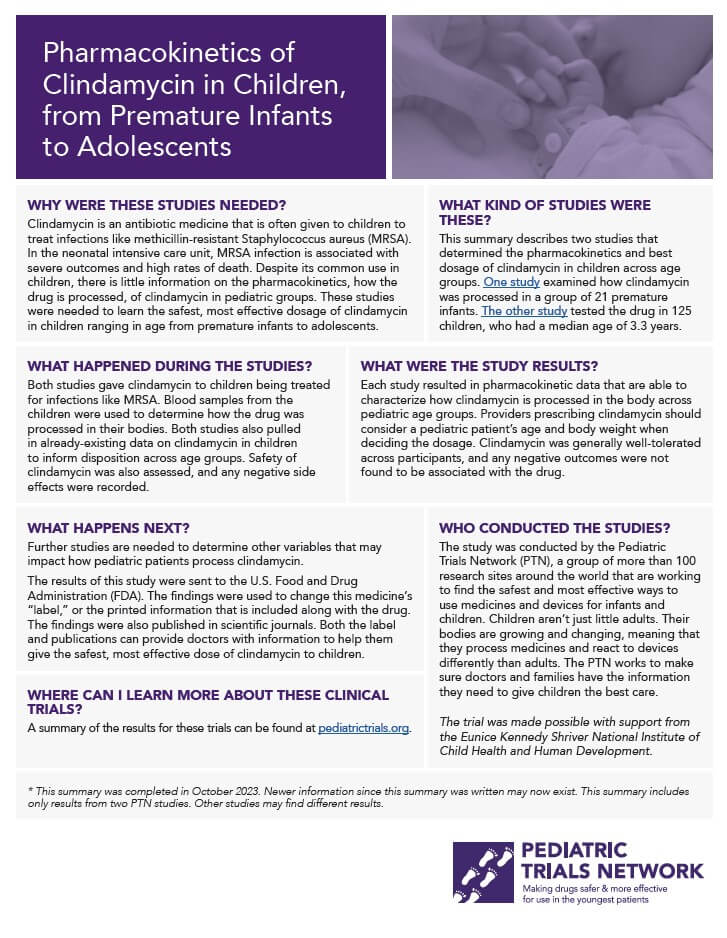



Thumbnail photo of oxycodone lay summary

Oxycodone Results-at-a-Glance

Read oxycodone Results-at-a-Glance summary.

Oxycodone is a pain-relieving medicine often prescribed to mothers after giving birth. Studies have shown that oxycodone transfers into breastmilk, but data were lacking on how much of it is transferred to a breastfeeding infant. This information was needed for providers and mothers to make the best, safest decisions regarding medicines and breastfeeding. The Pediatric Trials Network (PTN) study called “Commonly Used Drugs During Lactation and Infant Exposure (CUDDLE)” tested medicines, including oxycodone, to learn how they transfer from mother to baby through breastmilk.
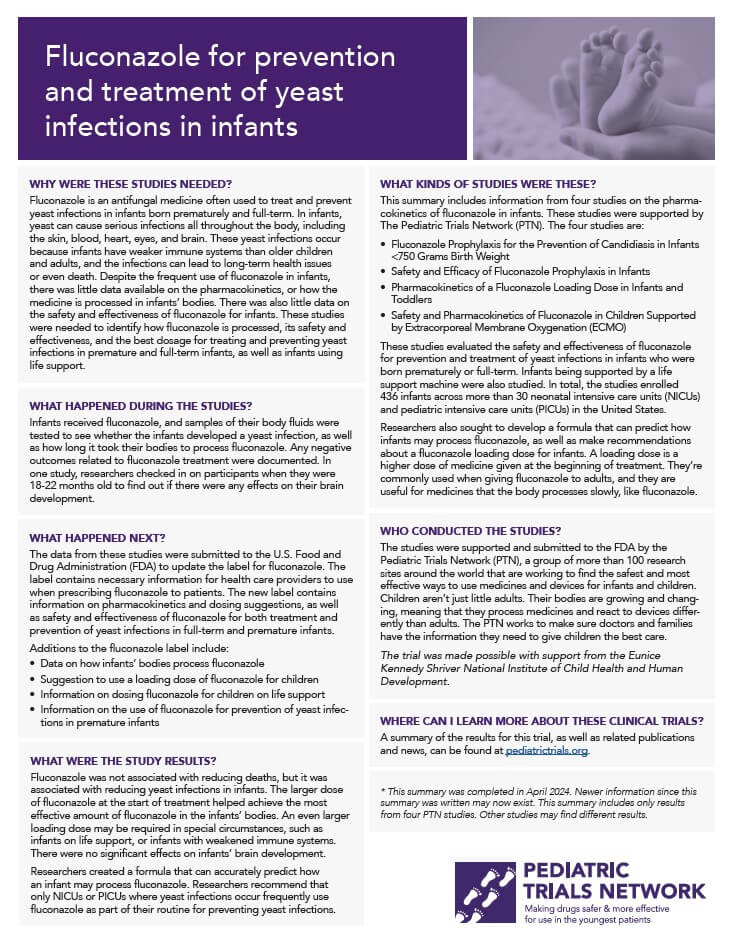
Fluconazole Results-at-a-Glance

Read fluconazole Results-at-a-Glance summary.

Fluconazole is an antifungal medicine often used to treat and prevent yeast infections in infants born prematurely and full-term. In infants, yeast can cause serious infections all throughout the body, including the skin, blood, heart, eyes, and brain. These yeast infections occur because infants have weaker immune systems than older children and adults, and the infections can lead to long-term health issues or even death. Despite the frequent use of fluconazole in infants, there was little data available on the pharmacokinetics, or how the medicine is processed in infants’ bodies.

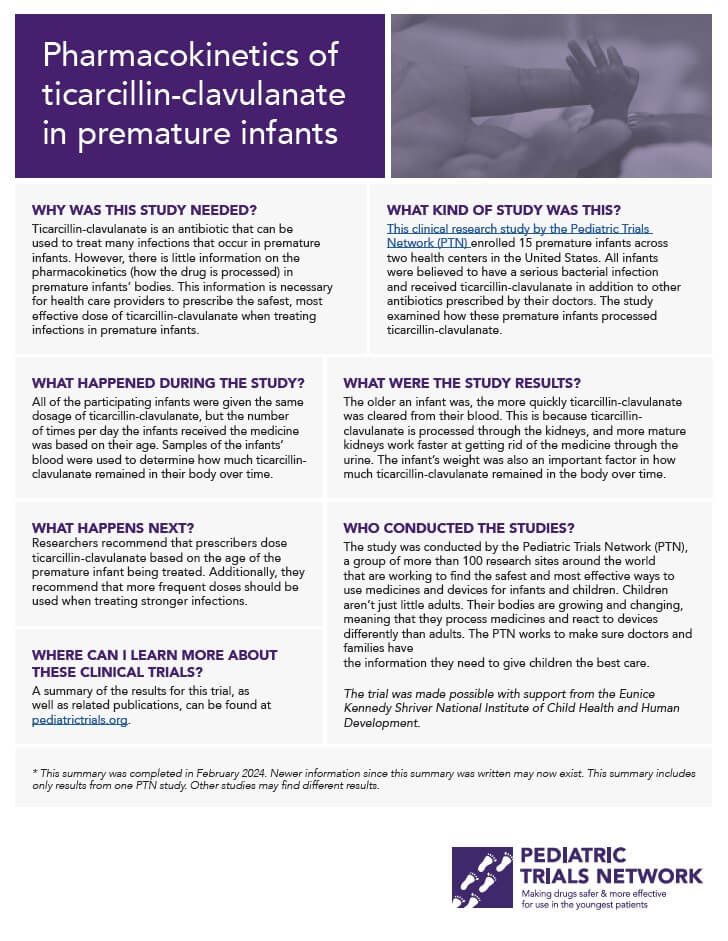
Ticarcillin-clavulanate Results-at-a-Glance

Read ticarcillin-clavulanate Results-at-a-Glance.

Ticarcillin-clavulanate is an antibiotic that can be used to treat many infections that occur in premature infants. However, there is little information on the pharmacokinetics (how the drug is processed) in premature infants’ bodies. This information is necessary for health care providers to prescribe the safest, most effective dose of ticarcillin-clavulanate when treating infections in premature infants.

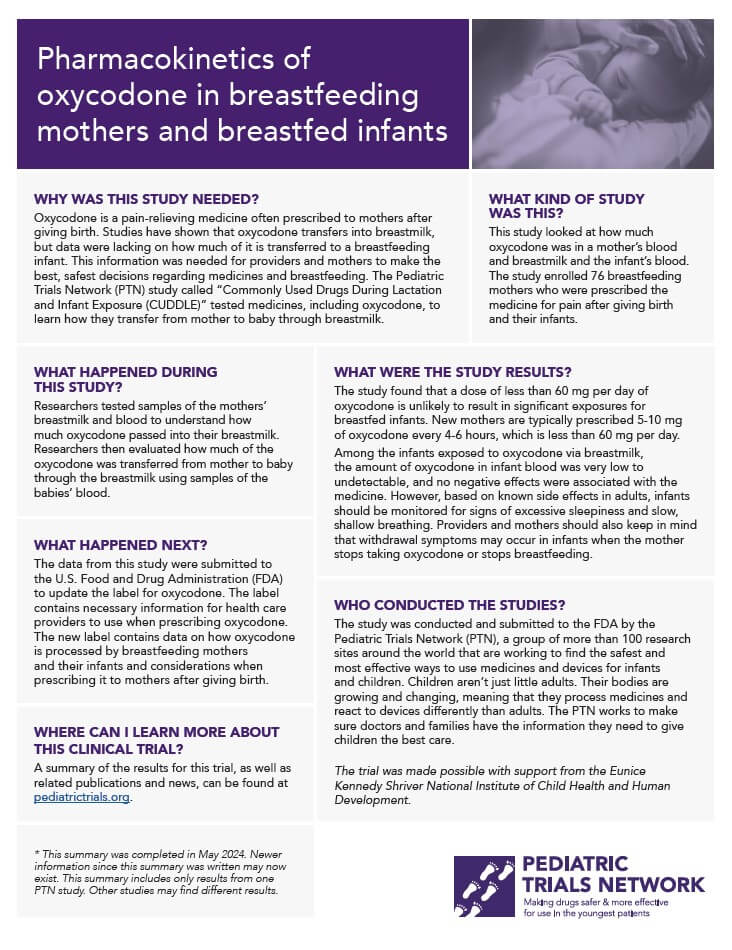
Thumbnail screenshot of Clindamycin results-at-a-glance.

Clindamycin Results-at-a-Glance

Read the clindamycin Results-at-a-Glance summary.

Clindamycin is an antibiotic medicine that is often given to children to treat infections like methicillin-resistant Staphylococcus aureus (MRSA). Despite its common use in children, there is little information on the pharmacokinetics, how the drug is processed, of clindamycin in pediatric groups. These studies were needed to learn the safest, most effective dosage of clindamycin in children ranging in age from premature infants to adolescents.


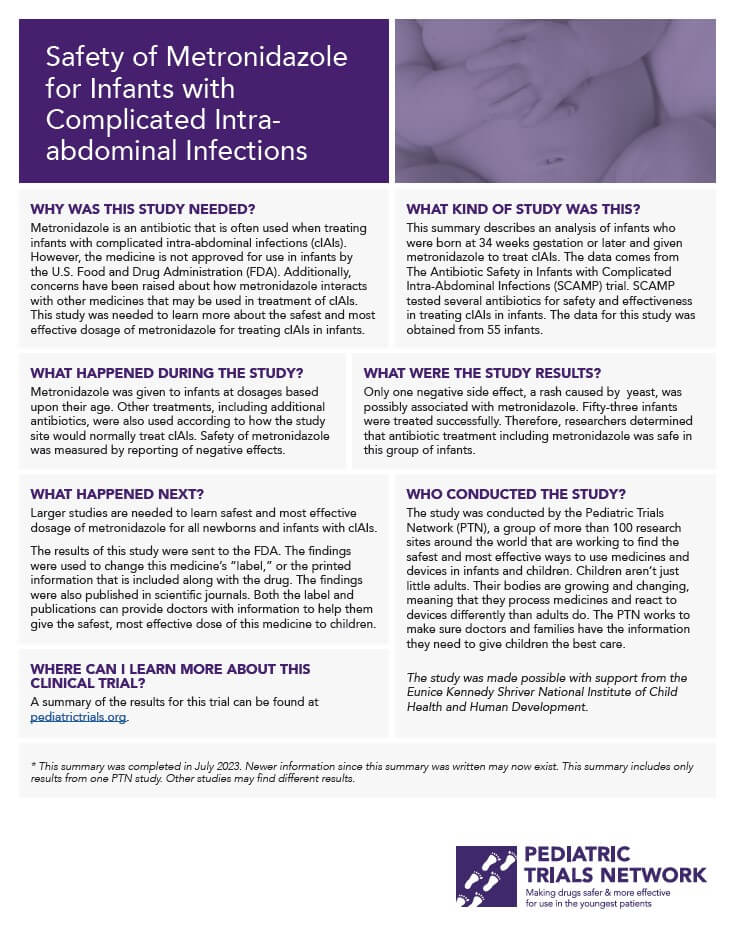
Thumbnail photo of metronidazole results-at-a-glance.

Metronidazole Results-at-a-Glance

Read metronidazole Results-at-a-Glance summary.

Metronidazole is an antibiotic that is often used when treating infants with complicated intra-abdominal infections. However, the medicine is not approved for use in infants by the U.S. Food and Drug Administration (FDA). This study was needed to learn more about the safest and most effective dosage of metronidazole for treating cIAIs in infants.