

Ticarcillin-clavulanate Results-at-a-Glance

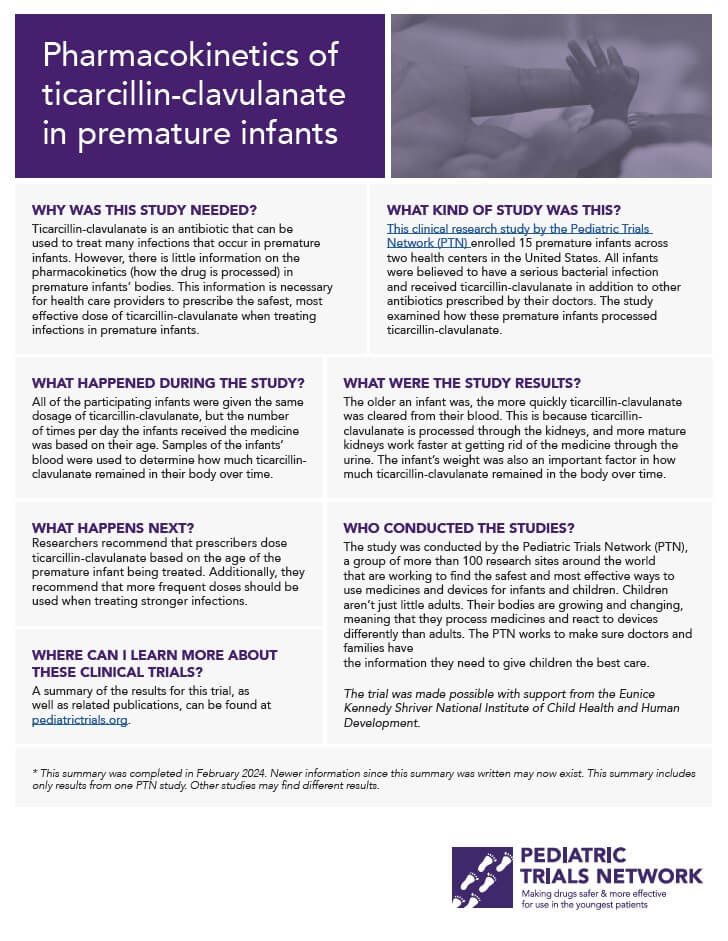
Read ticarcillin-clavulanate Results-at-a-Glance.

Ticarcillin-clavulanate is an antibiotic that can be used to treat many infections that occur in premature infants. However, there is little information on the pharmacokinetics (how the drug is processed) in premature infants’ bodies. This information is necessary for health care providers to prescribe the safest, most effective dose of ticarcillin-clavulanate when treating infections in premature infants.
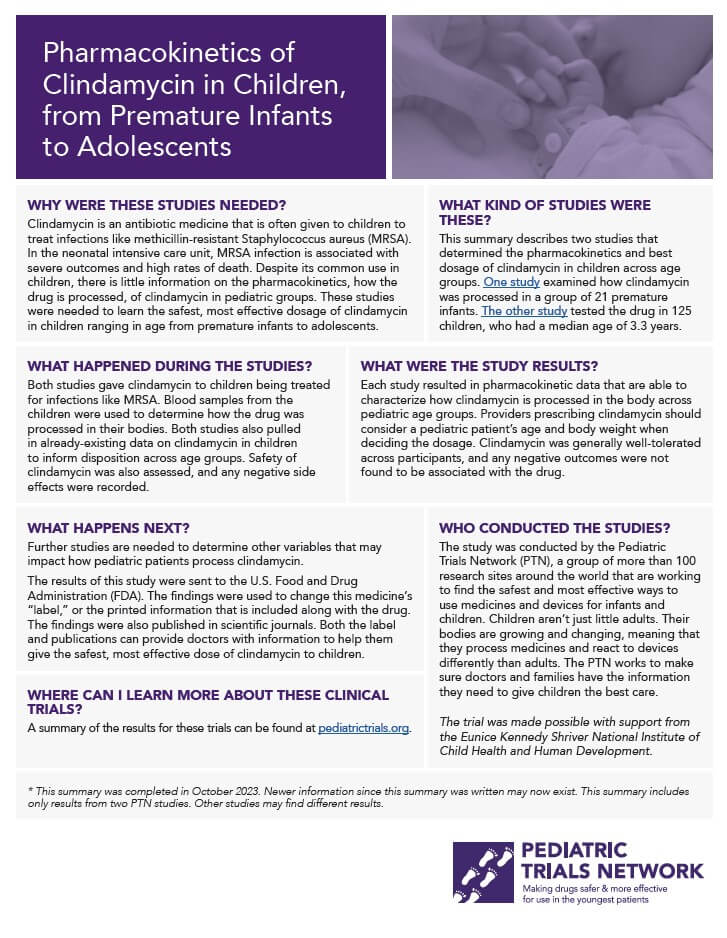
Thumbnail screenshot of Clindamycin results-at-a-glance.

Clindamycin Results-at-a-Glance

Read the clindamycin Results-at-a-Glance summary.

Clindamycin is an antibiotic medicine that is often given to children to treat infections like methicillin-resistant Staphylococcus aureus (MRSA). Despite its common use in children, there is little information on the pharmacokinetics, how the drug is processed, of clindamycin in pediatric groups. These studies were needed to learn the safest, most effective dosage of clindamycin in children ranging in age from premature infants to adolescents.


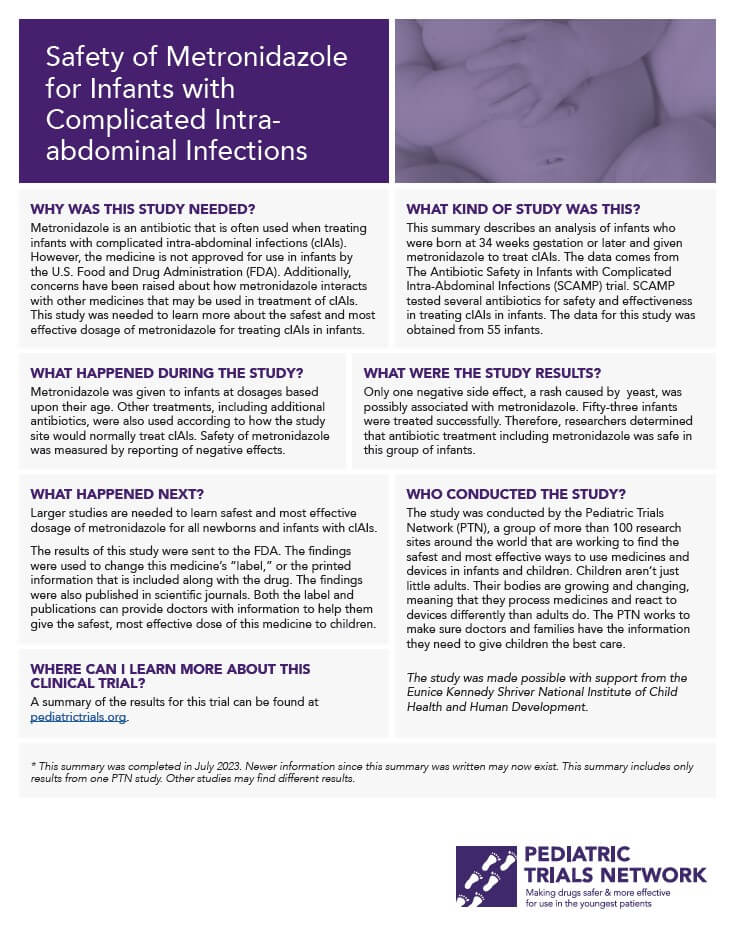
Thumbnail photo of metronidazole results-at-a-glance.

Metronidazole Results-at-a-Glance

Read metronidazole Results-at-a-Glance summary.

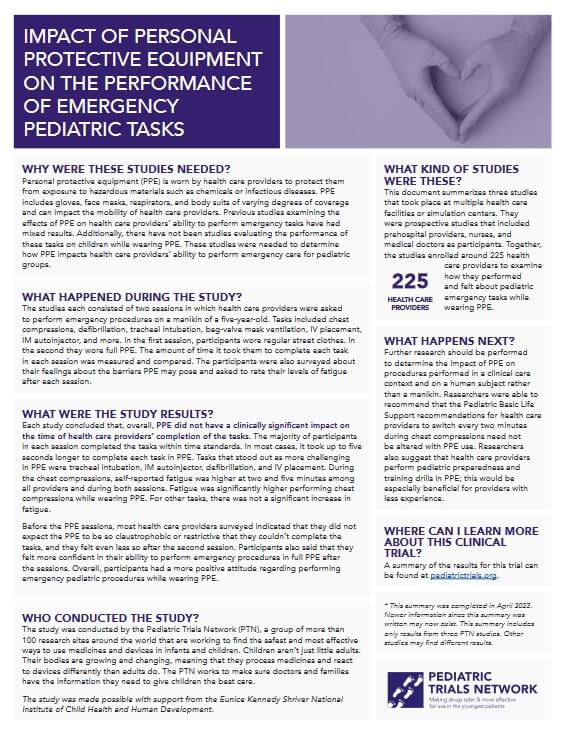
Metronidazole is an antibiotic that is often used when treating infants with complicated intra-abdominal infections. However, the medicine is not approved for use in infants by the U.S. Food and Drug Administration (FDA). This study was needed to learn more about the safest and most effective dosage of metronidazole for treating cIAIs in infants.

Thumbnail photo of PPE Results-at-a-Glance

PPE Results-at-a-Glance

Read PPE Results-at-a-Glance summary.

Personal protective equipment (PPE) is worn by health care providers to protect them from exposure to hazardous materials such as chemicals or infectious diseases. Previous studies examining the effects of PPE on health care providers’ ability to perform emergency tasks have had mixed results. Additionally, there have not been studies evaluating the performance of these tasks on children while wearing PPE. These studies were needed to determine how PPE impacts health care providers’ ability to perform emergency care for pediatric groups.

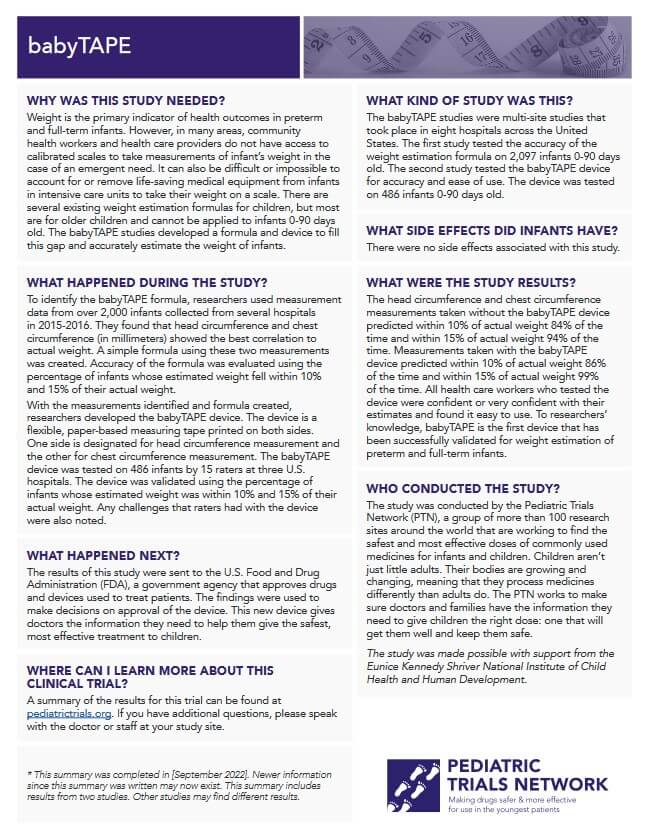
Thumbnail photo of babyTAPE results-at-a-glance

babyTAPE Results-at-a-Glance

Read the babyTAPE Results-at-a-Glance summary.

There are several existing weight estimation formulas for children, but most are for older children and cannot be applied to infants 0-90 days old. The babyTAPE studies developed a formula and device to fill this gap and accurately estimate the weight of infants.

Ampicillin Results-at-a-Glance

Read the ampicillin Results-at-a-Glance summary.

Ampicillin, a medicine used to treat infections, is the most commonly used drug in babies born prematurely who are admitted to the hospital. At the same time, practically no one has ever figured out how the drug is processed in newborns. The goal of the “Ampicillin in Infants Study” was to find out how newborns process ampicillin and determine the safest and most effective dose to treat infections.

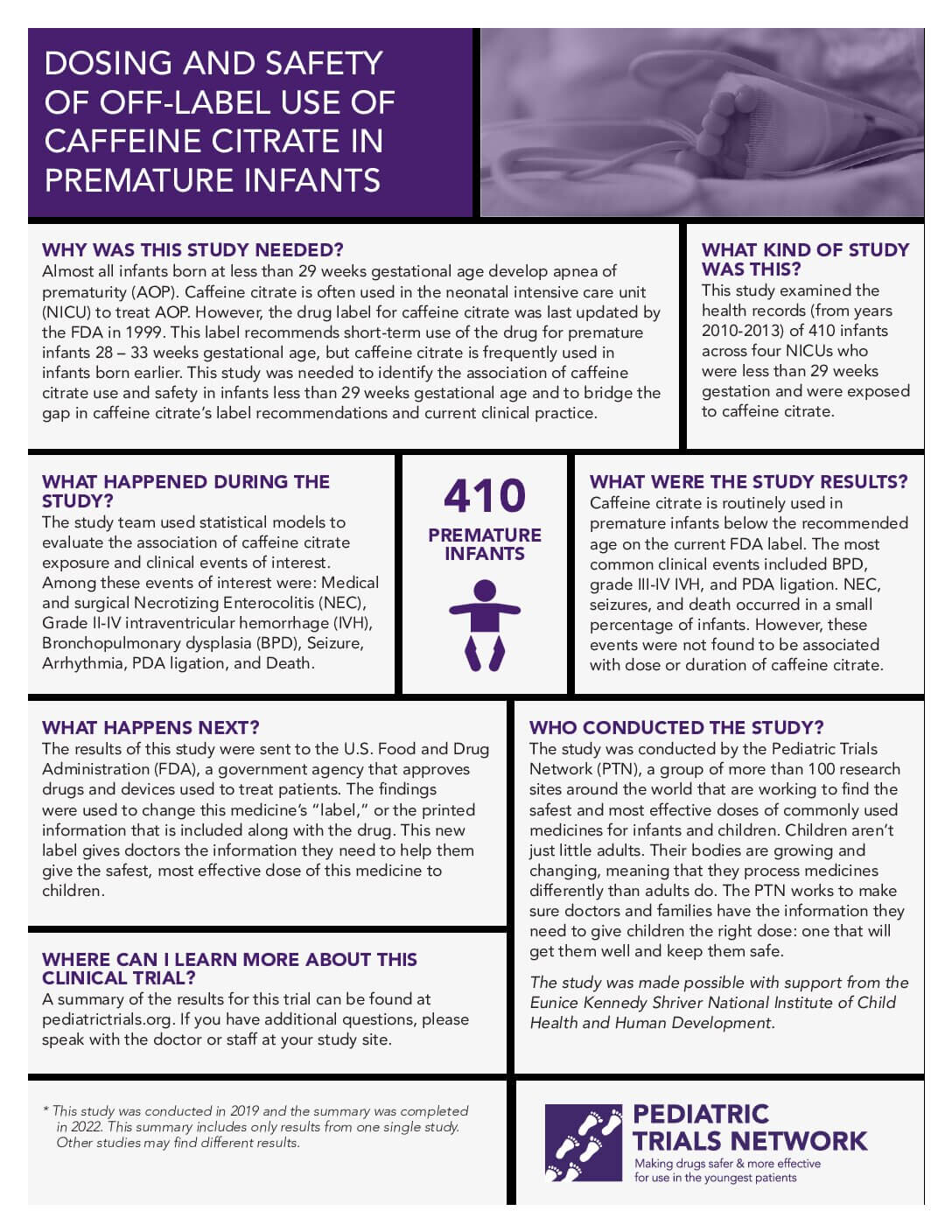
Caffeine Citrate Results-at-a-Glance

Read the caffeine citrate Results-at-a-Glance summary.

Almost all infants born at less than 29 weeks gestational age develop apnea of prematurity (AOP). Caffeine citrate is often used in the neonatal intensive care unit (NICU) to treat AOP. However, the drug label for caffeine citrate was last updated by the FDA in 1999. This label recommends short-term use of the drug for premature infants 28 – 33 weeks gestational age, but caffeine citrate is frequently used in
infants born earlier. This study was needed to identify the association of caffeine citrate use and safety in infants less than 29 weeks gestational age and to bridge the gap in caffeine citrate’s label recommendations and current clinical practice.

POP01 Results-at-a-Glance

Read the POP01 Results-at-a-Glance summary.

Many drugs that physicians prescribe to children are understudied and many lack dosing recommendations. This lack of information on pediatric drug dosing and safety can put children at risk for side effects and treatment failure when given a drug therapy that is not dosed appropriately.