
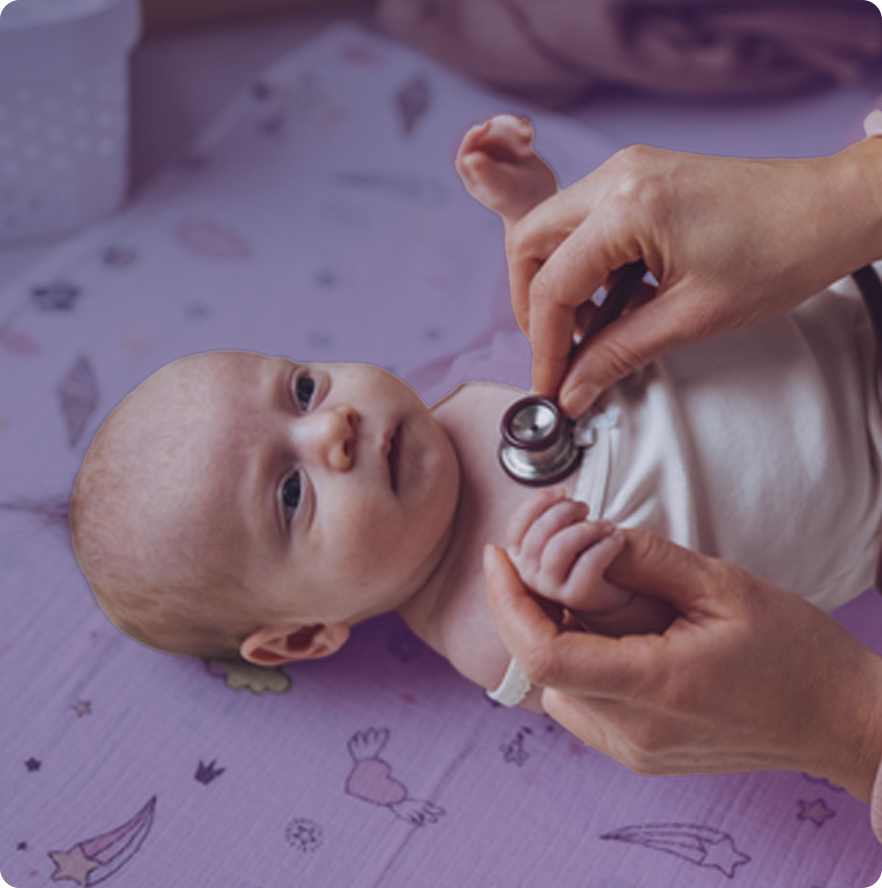






Assessing the safety and preliminary effectiveness of furosemide, which is often used to prevent bronchopulmonary dysplasia, in premature infants.
Summary
More than 60,000 infants are born ≤29 weeks gestational age each year in the United States, and nearly 40% of those develop bronchopulmonary dysplasia (BPD). Because the consequences of BPD can be catastrophic, neonatologists frequently use diuretics such as furosemide to reduce pulmonary edema, improve pulmonary mechanics, minimize exposure to mechanical ventilation, and, ultimately, to prevent BPD. The understanding of the safety profile of furosemide in premature infants, however, is limited.
The PTN is conducting a phase 2, randomized, multicenter, placebo-controlled, dose-escalating, double-masked safety study to evaluate the safety and preliminary effectiveness of furosemide in premature infants at risk of BPD. Approximately 120 infants will be enrolled at ~30 sites. Total duration of study participation is 35 days (28 days of treatment and 7 days of safety monitoring).
Publications
- Furosemide Safety in Preterm Infants at Risk for Bronchopulmonary Dysplasia: A Randomized Clinical TrialThe Journal of Pediatrics • April 2025 Access article on PubMed. Greenberg RG, Lang J, Smith PB, Shekhawat P, Courtney SE, Hudak ML, Moya F, Iyengar A, Eldemerdash A, Bloom B, Go M, Hanna M, Rhein L, Aliaga S, Lewis T, Febre A, Kiefer AS, Bhatt-Mehta V, Khoury JA, Selewski D, Anand R, Martz K, Payne EH, ...
- Medication Use in the Neonatal Intensive Care Unit and Changes from 2010 to 2018The Journal of Pediatrics • January 2022 Access article on PubMed. Stark A, Smith PB, Hornik CP, Zimmerman KO, Hornik CD, Pradeep S, Clark RH, Benjamin DK, Laughon M, Greenberg RG. The goal of this study was to provide up-to-date medication prescribing patterns in US neonatal intensive care units (NICUs) and to examine trends in prescribing patterns over ...
- Furosemide Exposure and Prevention of Bronchopulmonary Dysplasia in Premature InfantsThe Journal of Pediatrics • May 2019 Access article on PubMed. Greenberg RG, Gayam S, Savage D, Tong A, Gorham D, Sholomon A, Clark RH, Benjamin DK, Laughon M, Smith PB The goal of this study was to evaluate the association between furosemide exposure and risk of bronchopulmonary dysplasia (BPD) for premature infants. More days of furosemide exposure ...
- Prolonged furosemide exposure and risk of abnormal newborn hearing screen in premature infantsEarly Human Development • October 2018 Access article on PubMed. Wang LA, Smith PB, Laughon M, Goldberg RN, Ku LC, Zimmerman KO, Balevic S, Clark RH, Benjamin DK, Greenberg RG; Best Pharmaceuticals for Children Act – Pediatric Trials Network Steering Committee. At very high doses, furosemide is linked to ototoxicity in adults, but little is known about the ...
- Association between Furosemide Exposure and Patent Ductus Arteriosus in Hospitalized Infants of Very Low Birth WeightThe Journal of Pediatrics • August 2018 Access article on PubMed. Thompson EJ, Greenberg RG, Kumar K, Laughon M, Smith PB, Clark RH, Crowell A, Shaw L, Harrison L, Scales G, Bell N, Hornik CP This study evaluated the association between furosemide exposure and patent ductus arteriosus (PDA) in a large, contemporary cohort of hospitalized infants with very ...
- Comparative effectiveness of 3 surfactant preparations in premature infantsJournal of Pediatrics • October 2013 Access article on PubMed. Trembath A, Hornik CP, Clark R, Smith PB, Daniels J, Laughon M; Best Pharmaceuticals for Children Act—Pediatric Trials Network. To compare effectiveness of 3 surfactant preparations (beractant, calfactant, and poractant alfa) in premature infants for preventing 3 outcomes: (1) air leak syndromes; (2) death; and (3) bronchopulmonary dysplasia ...
OVERVIEW
Status:
Enrolling
ClinicalTrials.gov identifier:
NCT02527798
NICHD Data and Specimen Hub (DASH):
Infants Exposed to Furosemide or Bumetanide
Principal Investigators:
Matthew Laughon, MD, MPH
University of North Carolina
Chapel Hill, NC
P. Brian Smith, MD, MPH, MHS
Duke Health, Durham, NC
Label Change
- Based on PK results obtained from 51 premature infants (23-29 weeks gestational age (GA)) receiving repeated doses up to 4 times the maximum recommended total daily dose for intravenous (IV) administration (or 8 times the maximum recommended total daily dose for enteral administration), body weight and postnatal age were found to have an impact on furosemide clearance.
- Median clearance (normalized by dosing weight) was observed to increase from 8.9 (range: 2.1-21.2) ml/h/kg in infants with postnatal age (PNA) <30 days to 25.3 (range: 8.3 to 44.2) ml/h/kg in infants with PNA >30 days.
- In addition, higher clearance was observed in infants with higher body weight. Bioavailability of enteral dose compared to IV dose was estimated to be around 79%.